record labels
major vs independent

If you enjoy reading Life of Gay, please like, share and subscribe. Troye Sivan just joined Substack so you see who I have to compete with. It’s twink central here.
What do record labels actually do? I think about this quite often. The music industry, like film and fashion, is kind of a mystery for the everyday person. Myself included. I don’t work in the music industry, of course, so why does this even matter? As a voracious consumer of music, it matters a lot. From coffee beans to clothing to music, I have a curiosity to dig a bit deeper.
Record labels are generally responsible for: recording, distribution, marketing, artist development, finances, merch and touring. How it all works, I have no clue. We might have a better chance at explaining the galaxy.
There are two types of labels: major and independent. Major labels include “the big three”: Universal Music Group, Sony Music and Warner Music Group. These major labels also own a plethora of other labels referred to as label groups. The major labels have access to capital, studios, sound engineers, songwriters and producers. What do you lose when there are so many hands on the product? The artist roster leans mainstream, commercial and digestibility with the goal of making a cultural impact. Ahem, money. Most of the time, the art itself is not the objective. It’s marketing. I’m not immune to mainstream pop music. I think it’s fun, irreverent and a point in time in culture. I listen to a lot of KATSEYE (Hybe x Geffen) and I’m cognizant these girls are products. And the marketing efforts are making a killing return.
Charli XCX has had a long public feud with her record label Atlantic (a label group under Warner Music Group). Atlantic pushed aggressively to market Charli XCX as more mainstream as she continued to pursue her own creative agenda of making the music she wanted. More experimental and hyperpop. With her fifth and final album under the Atlantic deal, Crash, she played with the idea of “what if I played the game” that the industry wanted of her. Crash was a commercial and pop success. Then came BRAT and people finally knew Charli XCX. It was kind of surprising that she signed with Atlantic again for BRAT considering she burned those bridges with the “Used To Know Me” music video.
Other artists haven’t been as lucky as Charli XCX. They could have just not released Crash and have been trapped in Atlantic hell. Record labels are notorious for a long list of shady behaviour. Especially young female artists. Tei Shi didn’t receive payment after releasing La Linda (Downtown Records [Interscope Records]. Sky Ferreira was finally dropped by Capitol Records after holding her hostage for a decade. There was even a #FreeSkyFerreira championed by fans. Kelis did not make any royalties from her first two records signed under Virgin and Star Trak (The Neptunes). She did not make a cent from “Milkshake.”
Independent labels are really just any record label that operates outside of “the big three.” Artists generally begin their career here with some hoping of signing with a major record label. The appeal I think what sets independent record labels apart is creative freedom. With that comes financial constraints. And friction can produce really exceptional work. Friction-maxxing, as they say.
My rotation of music is often released with independent record labels. Arbutus Records (Blue Hawaii, TOPS). Sub Pop (Weyes Blood, Father John Misty). Sacred Bones (Black Marble, Boy Harsher). Secretly Canadian (Faye Webster, Yeah Yeah Yeahs). Dead Oceans (Japanese Breakfast, Phoebe Bridgers). Matador Records (Perfume Genius, Snail Mail). 4AD (Cocteau Twins, Erika de Casier).
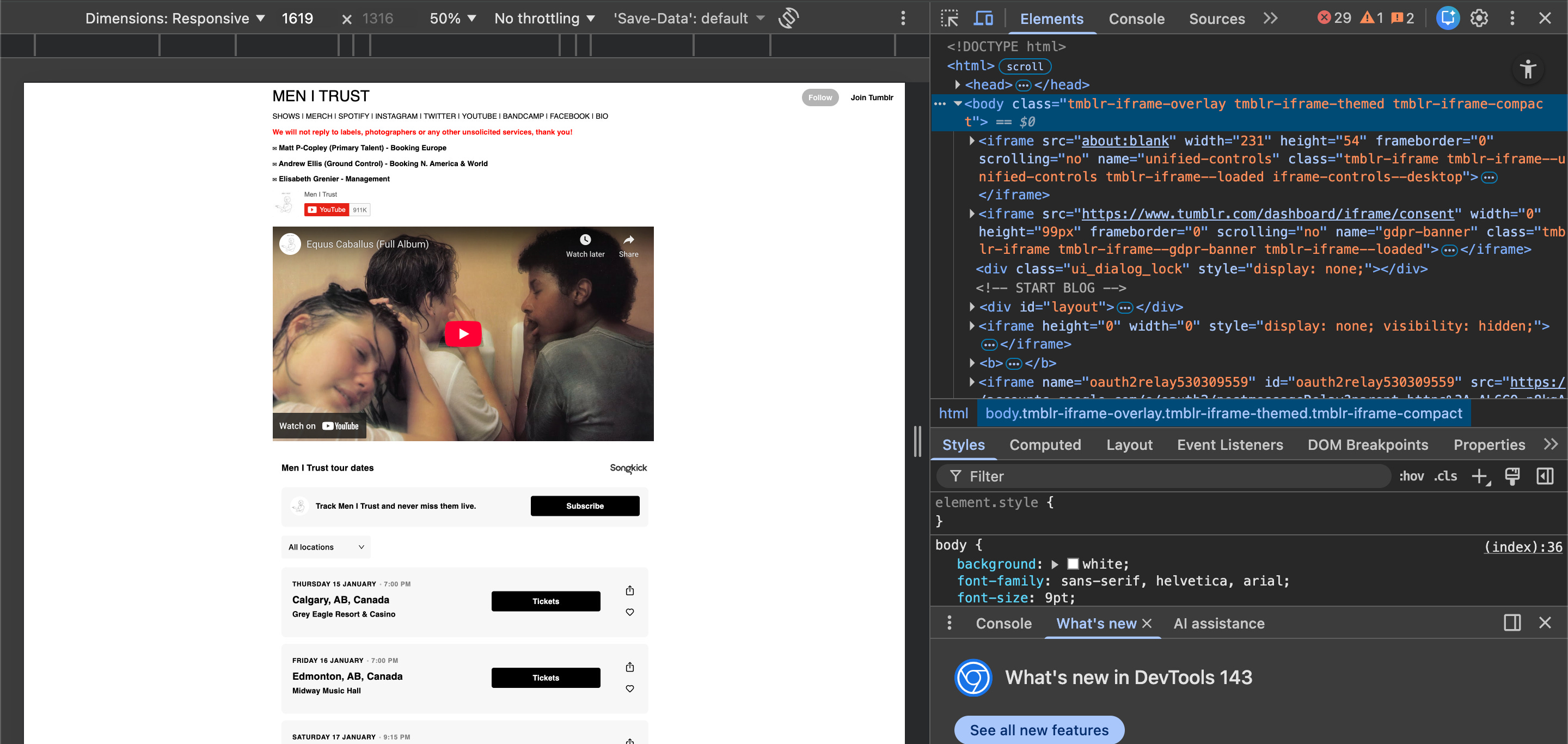
And if you really, really want to make sure you own the masters, just start your own record label. Sufjan Stevens has Asthmatic Kitty. Lykke Li with LL Recordings. Men I Trust is so unequivocally independent I can’t even put a label on it. They work with Return to Analog for distribution. They use Tumblr for their website.